
Onduleur hors réseau à haute puissance : Guide complet de taille, design et tendances du marché 2026
Par hqt
2026.06.18Articles connexes
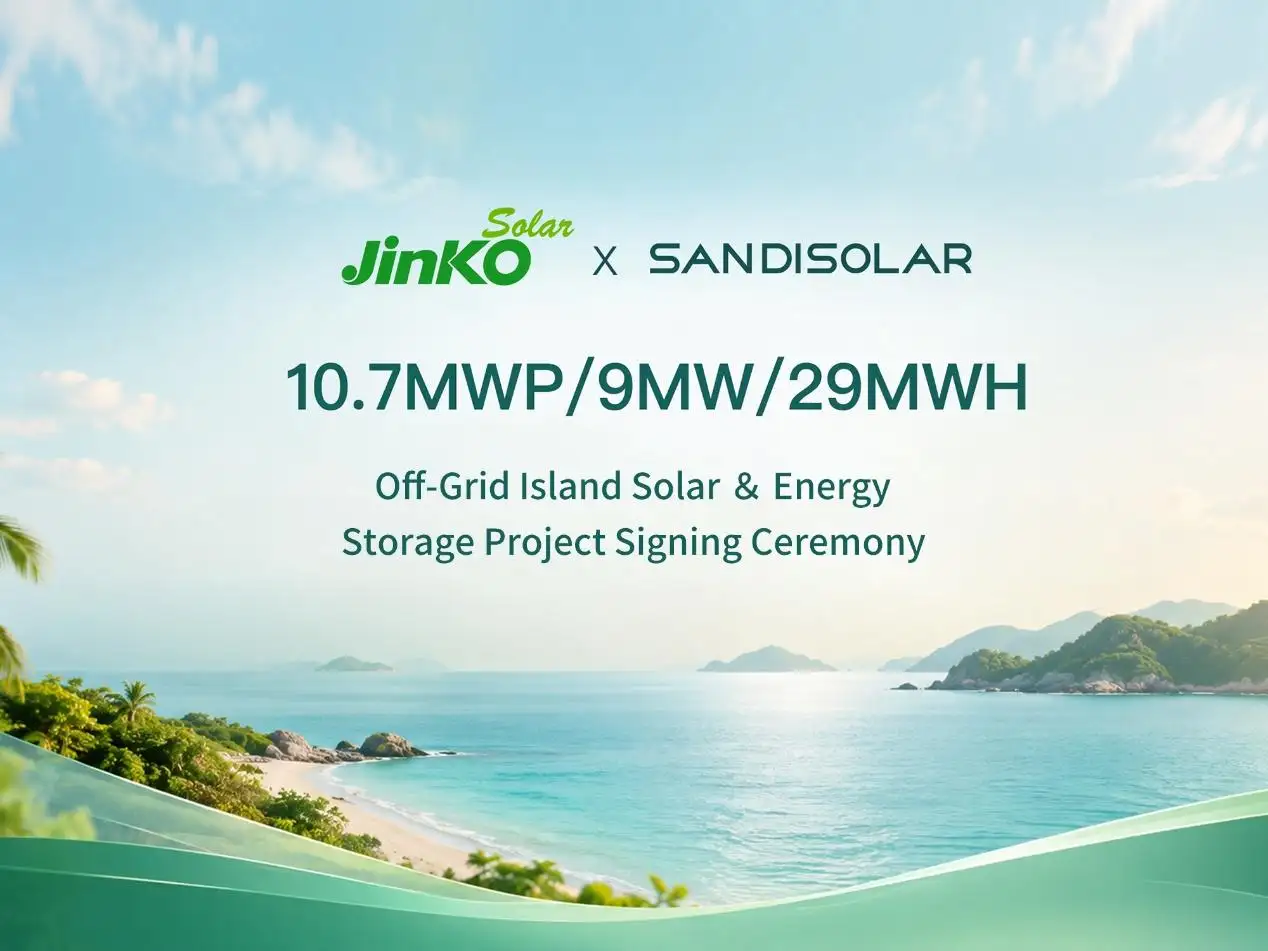
SANDISOLAR s’associe à Jinko Solar pour réaliser un projet solaire et de stockage hors réseau de 10,7 MW
23 septembre 2026
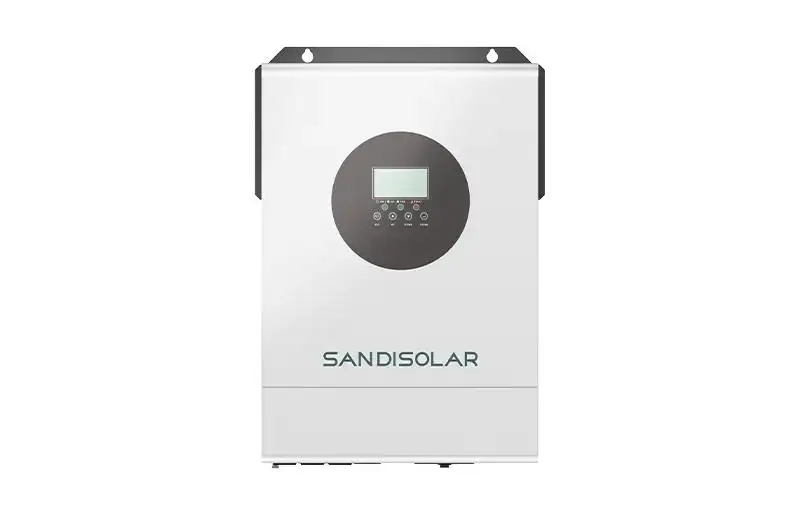
Onduleur hors réseau 48V 6kW : pourquoi les systèmes de batteries 48V sont courants pour les systèmes solaires à haute puissance
31 août 2026
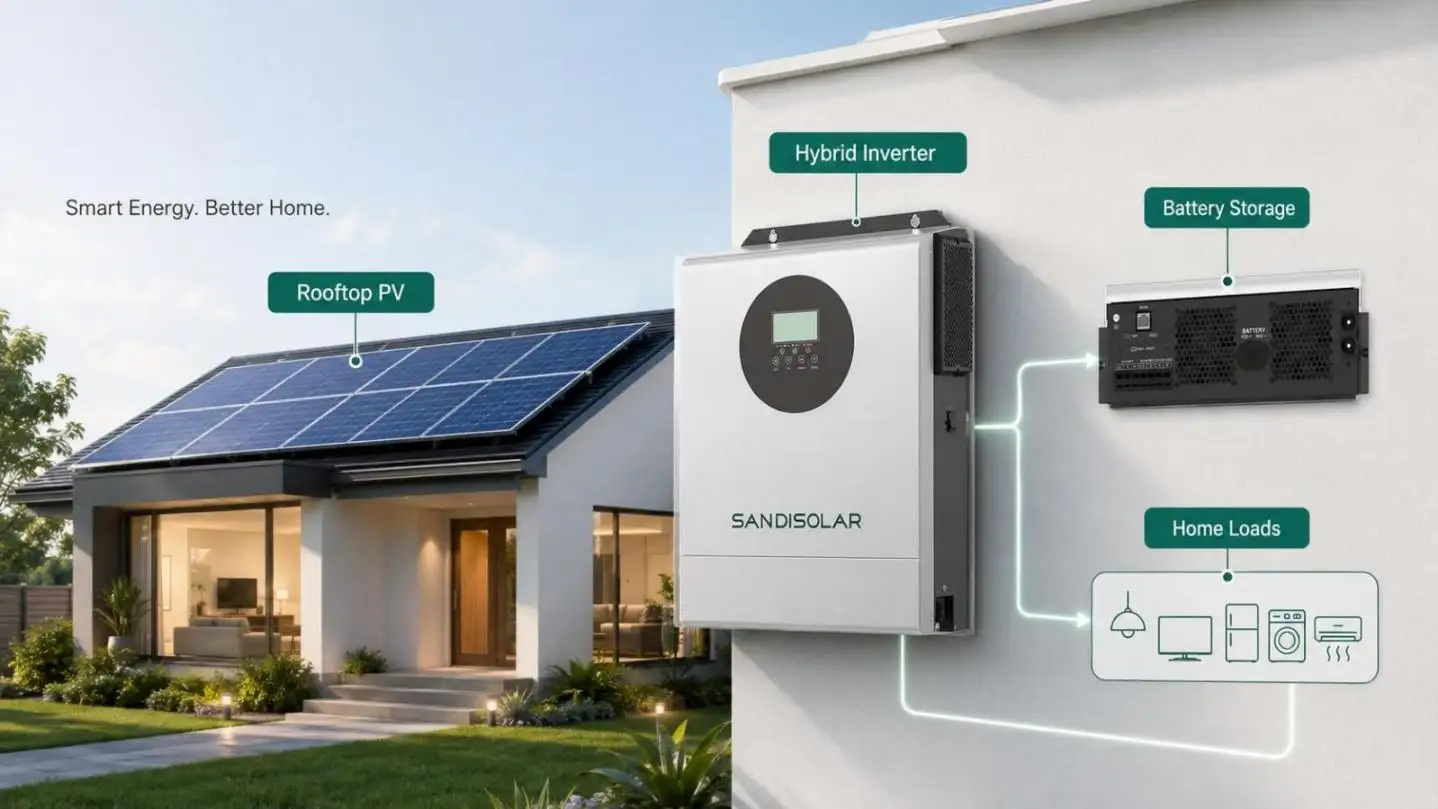
Installation résidentielle de systèmes solaires : dimensionnement technique, correspondance des systèmes et guide d’installation
31 août 2026
L’alimentation hors réseau est bien plus avancée que de petites cabines et d’éclairage de secours. En 2024, des onduleurs hors réseau à haute puissance exploitent des villas de luxe, des fermes commerciales, des tours de télécoms, des complexes insulaires et des mini-réseaux dans des communautés isolées. Au centre de chaque système solaire hors réseau moderne se trouve un onduleur robuste capable de fournir une puissance continue haute CA à partir de sources DC, de gérer de lourdes surtensions provenant de pompes et moteurs, et de fonctionner de manière fiable dans des environnements difficiles.
Ce guide présente les principales technologies et spécifications des onduleurs, les stratégies de dimensionnement correctes pour les systèmes de 5 kW à 100 kW, des conseils de conception pour les systèmes solaires et de stockage, les tendances du marché 2024, ainsi que des comparaisons pratiques entre onduleurs hors réseau, hybrides et en ligne.
Qu’est-ce qu’un onduleur hors réseau à haute puissance ?
Un onduleur hors réseau à haute puissance est une unité autonome qui convertit l’alimentation continue provenant de batteries, solaire, groupes électrogènes ou éoliennes en alimentation courante alternative, lorsqu’il n’y a pas de connexion au réseau ou que le réseau est intentionnellement isolé. Il fournit une puissance continue généralement de 5 kW à plusieurs centaines de kW, avec une forte capacité de surtension, et gère la stabilité et la fréquence du système en tant que dispositif de formation de grille.
Contrairement aux onduleurs connectés au réseau ou hybrides standards, les onduleurs hors réseau à haute puissance créent eux-mêmes un réseau AC stable. Ils sont essentiels lorsque l’infrastructure des services publics est inaccessible, peu fiable ou trop coûteuse à étendre.
Classes de puissance typiques
- Résidentiel et petites entreprises : 5 kW à 15 kW
- Domaines, fermes, maisons d’hôtes : 15 kW à 40 kW
- Commerciale, industrielle légère, stations balnéaires : 40 kW à 150 kW
- Mini-réseaux communautaires et charges industrielles : 150 kW à 1 MW
Technologies clés dans les onduleurs hors réseau modernes à haute puissance
Onde sinusoïdale pure, sortie THD faible
Les onduleurs hors réseau à haute puissance doivent fournir une sortie en onde sinusoïdale pure avec une faible distorsion harmonique totale (THD), généralement inférieure à 3 à 5 %. Cela garantit la compatibilité avec les moteurs à induction, les compresseurs, les variateurs de fréquence et les électroniques sensibles comme les serveurs et les dispositifs médicaux. Les unités sinusoïdales modifiées ne conviennent pas aux systèmes modernes hors réseau à haute puissance.
MPPT vs Onduleurs hors réseau non MPPT
De nombreux systèmes hors réseau à haute puissance utilisent un onduleur plus un contrôleur de charge MPPT externe, ou un onduleur tout-en-un hors réseau avec MPPT intégré. Le MPPT intégré offre un câblage et une installation simplifiés, tandis que les contrôleurs séparés offrent une plus grande flexibilité de conception et redondance dans les très grands systèmes.
Conceptions basées sur transformateurs vs sans transformateurs
Les onduleurs à transformateur offrent une isolation galvanique robuste, une capacité de surtension élevée de 2 à 3 fois la puissance nominale, mais sont plus lourds avec un rendement inférieur de 90 à 94 %. Les onduleurs sans transformateur ont un rendement supérieur, de 96 à 98 %, et un coût des matériaux par kW plus faible, mais nécessitent une mise à la terre soigneusement portée et une conception RCD. Pour les systèmes hors réseau à haute puissance supérieurs à 20 kW, l’isolation et la résilience aux surtensions des conceptions à transformateurs valent souvent le coût supplémentaire, en particulier dans des environnements difficiles ou isolés.
Formation en grille et fonctionnement parallèle
Les onduleurs hors réseau modernes à haute puissance sont en forme de réseau et peuvent contrôler la tension et la fréquence comme source de référence, fonctionner en parallèle pour l’échelle de la puissance et partager les charges via le contrôle du droop ou la communication numérique. Cela permet une alternance triphasée de 380 à 415 V CA pour les moteurs industriels, une redondance N 1 pour les applications critiques, et une expansion progressive du système.
Comment dimensionner correctement un onduleur hors réseau à haute puissance
Étape 1 : Calculer un profil de charge réaliste
Construisez une liste de charges incluant le type d’appareil, la puissance nominale, la quantité, les heures d’utilisation, la méthode de démarrage et la priorité. De là, on tire la consommation simultanée maximale de puissance et d’énergie quotidienne. Un petit site commercial peut totaliser 18 kW de charge de pointe et 80 à 100 kWh d’énergie quotidienne.
Étape 2 : Considérez les charges de surtension (démarrage)
Les charges inductives nécessitent souvent de 2 à 7 fois leur puissance nominale au démarrage. Les pompes à eau, compresseurs, chambres froides et climatiseurs ont tous un courant d’appel important. Votre onduleur hors réseau à haute puissance devrait supporter une puissance continue d’au moins 1,25 fois la charge de pointe et une puissance de surtension d’au moins 2 fois, de préférence jusqu’à 3 fois, la puissance de démarrage du plus grand moteur.
Pour une pompe de puits profond de 4 kW avec environ 12 kW de surtension de démarrage et une charge de fonctionnement de base de 8 kW, l’onduleur nécessite une capacité minimale de surtension d’environ 20 kW et une puissance continue d’au moins 15 kW.
Étape 3 : Prendre en compte l’expansion future
Les systèmes hors réseau sont rarement statiques. Conçu pour une croissance de charge de 25 à 50 % sur les 5 à 10 prochaines années. Souvent, une architecture modulaire multi-onduleur telle que 3 unités de 10 kW en parallèle est meilleure qu’une seule unité de 30 kW, tant pour la scalabilité que pour la redondance.
Étape 4 : Vérifiez le niveau de tension continue et les pertes dans les câbles
Des tensions plus élevées au bus DC réduisent le courant et les pertes. Les systèmes 48 V fonctionnent jusqu’à environ 10 à 15 kW. Les systèmes de 96 à 120 V conviennent à des puissances de 15 à 40 kW. Les systèmes de batteries 200 à 400 V DC sont préférés pour les onduleurs hors réseau à haute puissance supérieurs à 40 à 50 kW. Une tension continue plus élevée réduit la taille et le coût du cuivre, mais exige une conception stricte de la sécurité et le respect des codes électriques locaux.
Concevoir un système solaire plus stockage autour d’un onduleur hors réseau à haute puissance
Taille de la banque de batteries et sélection de la chimie
Les onduleurs hors réseau à haute puissance fonctionnent avec diverses chimies. Les options au plomb-acide comme GEL, AGM et OPzV ont un coût initial plus bas mais sont lourdes, avec une profondeur de décharge et une durée de vie limitées. Les options lithium-ion comme le LiFePO₄ offrent une meilleure efficacité, une durée de vie de cycle plus longue et un meilleur adaptement aux cycles fréquents ainsi qu’à un débit énergétique quotidien important.
La taille de la batterie dépend de l’autonomie requise, de la profondeur de décharge acceptable et de la durée de vie souhaitée du système. Pour un système hors réseau de 30 kW avec une charge quotidienne de 150 kWh, une autonomie de 1,5 jour et 80 % de DoD avec lithium, la taille totale de la banque est d’environ 280 kWh. L’onduleur hors réseau à haute puissance doit être compatible avec le BMS et la fenêtre de tension de la batterie.
Conception de réseaux photovoltaïques pour une alimentation hors réseau à haute puissance
Les considérations clés incluent la demande énergétique quotidienne, le rendement solaire saisonnier, la disponibilité du toit par rapport à la montée au sol et l’orientation des réseaux. Une règle approximative pour les systèmes hors réseau avec cycle quotidien est environ 1,1 à 1,5 fois la charge quotidienne de kWh divisée par la moyenne quotidienne des heures solaires. Dans les régions à forte irradiation visant une forte autosuffisance, il est courant de surdimensionner le PV dans les limites des onduleurs pour recharger les batteries tôt dans la journée, supporter directement les charges lourdes en journée et réduire la dépendance aux générateurs de secours.
Intégration du générateur pour la haute disponibilité
Pour les systèmes critiques, l’intégration d’un générateur diesel ou à gaz assure une solution de secours lors des périodes nuageuses prolongées, un coup de pic pour des charges très élevées rares et une marge d’entretien lors des travaux sur batterie. Les onduleurs modernes hors réseau prennent en charge le démarrage automatique des générateurs, la gestion de charge pour minimiser la consommation de carburant et des transitions intelligentes pour éviter le scintillement et les redémarrages des appareils.
Tendances du marché 2024 pour les onduleurs hors réseau à haute puissance
Croissance rapide des projets hors réseau et en périphérie réseau C&I
Les marchés hors réseau et réseau faible se développent, les opérations industrielles et minières éloignées nécessitant une alimentation fiable et prévisible, les stations balnéaires et les exploitations agricoles recherchent l’indépendance énergétique et les coûts d’extension du réseau restent élevés dans les zones isolées. Cela stimule la demande de systèmes onduleurs hors réseau à haute puissance dans la gamme de 20 à 250 kW, souvent combinés avec des batteries lithium et de grands réseaux photovoltaïques.
Passage à des tensions continues plus élevées et des architectures modulaires
Les concepteurs privilégient de plus en plus les systèmes de batteries dans la gamme de 200 à 800 V CC, les onduleurs modulaires de 20 à 60 kW pouvant être parallèles pour des systèmes de 100 kW, ainsi que les blocs de puissance conteneurisés intégrant batteries, onduleur, commandes et équipements de commutation. Les avantages incluent des coûts d’équilibre du système plus faibles, une logistique et un déploiement plus simples dans les régions éloignées, ainsi qu’une mise en service plus rapide grâce à une maintenance standardisée.
Contrôles plus intelligents et surveillance à distance
Les systèmes 2024 incluent régulièrement des systèmes avancés de gestion énergétique, la surveillance à distance via des plateformes cloud et l’intégration avec des systèmes de contrôle de bâtiments ou de procédés. Pour les onduleurs hors réseau à haute puissance, cela permet une coupure intelligente et une hiérarchisation, des plannings optimisés de charge et de décharge, ainsi qu’une maintenance prédictive et une gestion de flotte.
Politiques et moteurs de réduction du carbone
Dans de nombreuses régions, la politique pousse le remplacement du diesel et des mini-réseaux renouvelables par des incitations pour le solaire et le stockage, des exigences de déclaration du carbone pour les mines et les sites industriels, ainsi que des réglementations de soutien pour les microréseaux distribués et îlotés. Les onduleurs hors réseau à haute puissance sont au cœur de ces architectures à faible émission de carbone et à haute fiabilité.
Onduleur hors réseau vs Onduleur hybride vs Onduleur connecté au réseau
Onduleur hors réseau (autonome, formant le réseau)
Conçue pour fonctionner sans aucun réseau, sa mission principale est de créer et de maintenir un réseau AC stable. Cela inclut généralement la recharge de la batterie et le support du générateur. Idéal pour des endroits totalement isolés ou là où l’islanding est le mode par défaut.
Onduleur hybride
Peut fonctionner aussi bien sur le réseau que hors réseau, ou en mode secours. Souvent privilégié pour l’auto-consommation et le secours dans les bâtiments connectés au réseau. Certains modèles sont suffisamment puissants pour servir d’onduleurs hors réseau à haute puissance, mais pas tous. Lors du choix d’un onduleur hybride haute puissance pour une utilisation hors réseau, vérifiez la capacité de formation du réseau et les caractéristiques de démarrage sans électricité, et confirmez la sortie continue et surtension nominale en mode îlot, et pas seulement en mode connecté au réseau.
Onduleur à fils et à réseau central
Il faut être connecté à un réseau stable pour fonctionner. Ne peut pas faire fonctionner des charges directement ni former sa propre grille. Dans les scénarios hors réseau ou non fiables, ces systèmes ne sont utilisés qu’en conjonction avec des onduleurs de batterie séparés et des systèmes de contrôle.
Spécifications clés à évaluer dans un onduleur hors réseau à haute puissance
Alimentation et surtension
Sortie continue (kW ou kVA) à température ambiante spécifiée, puissance de surtension et durée (par exemple, 200 % pendant 10 secondes) et support du facteur de puissance (par exemple, 0,8 à 1,0).
Efficacité et gestion thermique
Rendement de pointe et d’euros, courbes de déclassement par rapport à la température ambiante, type de refroidissement (refroidissement à air forcé ou liquide) et température maximale de fonctionnement avec dégradation.
Compatibilité de la tension et des batteries
Plage de tension CC supportée, chimie compatible et intégration BMS ainsi que courants maximaux de charge et de décharge.
Sortie AC et fonctions de formation de grille
Tension de sortie (par exemple, 230/400 V ou 120/208 V) et fréquence, capacité monophasée ou triphasée et fonctionnement en parallèle avec un nombre maximal d’unités et méthode de communication.
Protection et sécurité
Protection contre la surcharge, les courts-circuits et la surchauffe, les options de protection contre les surtensions en courant continu et alternatif ainsi que la conformité aux normes pertinentes (par exemple, IEC/EN, UL lorsque applicable).
Communications et contrôle
RS-485, CAN, Ethernet, Modbus et autres protocoles, compatibilité avec les plateformes SCADA ou systèmes de gestion énergétique, ainsi que des capacités de mise à jour à distance du firmware.
Applications typiques des onduleurs hors réseau à haute puissance
Opérations industrielles éloignées et exploitation minière
Alimentation continue pour les concaissants, convoyeurs, pompes et éclairages avec de fortes économies énergétiques par rapport au diesel à 100 % et une amélioration des performances environnementales pour la déclaration ESG.
Systèmes agricoles et d’irrigation
L’électricité pour les pompes, les entrepôts frigorifères et les équipements de traitement avec la production solaire diurne est alignée sur les calendriers d’irrigation et réduit la dépendance aux livraisons de carburant et aux pannes du réseau.
Complexes touristiques et éco-lodges
Alternative silencieuse et à faibles émissions aux systèmes uniquement générateurs, avec une alimentation électrique de haute qualité pour le CVC, les cuisines et l’électronique des invités, et la possibilité d’évoluer avec l’occupation saisonnière.
Télécommunications et infrastructure de données
Alimentation fiable pour les stations de base, les nœuds relais et les centres de données locaux avec intégration avec des batteries pour une longue autonomie de secours et une surveillance à distance ainsi que la maintenance prédictive à distance.
Mini-réseaux communautaires
Onduleur(s) centralisé(s) hors réseau à haute puissance alimentant un réseau de distribution AC pour les charges domestiques et communautaires (écoles, cliniques, entreprises) avec une voie intégrée pour évoluer vers une future interconnexion réseau si désiré.
Liste de contrôle pratique pour la sélection des projets 2024
Lors du choix d’un onduleur hors réseau à haute puissance pour un projet réel, il faut prendre en compte les caractéristiques de charge incluant la demande totale et de pointe, les charges des moteurs et les exigences en qualité d’énergie. Évaluez l’environnement et l’emplacement, y compris les extrêmes de température, la poussière et l’humidité. Choisissez une stratégie de batterie basée sur le lithium versus le plomb-acide, l’autonomie souhaitée et le cycle de cycle. Dimensionnez le réseau photovoltaïque et planifiez une expansion future. Déterminer les exigences de contrôle et d’intégration, y compris l’intégration des générateurs, le SCADA et la surveillance à distance. Vérifier la conformité réglementaire aux codes électriques locaux, aux normes de sécurité et aux exigences des services publics si une connexion partielle au réseau existe. Calculez le coût du cycle de vie sur 10 à 20 ans, pas seulement les dépenses en capital, incluant l’efficacité et la maintenance par rapport aux économies de carburant et logistiques.
Conclusion : Concevoir une alimentation hors réseau fiable et évolutive avec des onduleurs à haute puissance
Les onduleurs hors réseau à haute puissance sont désormais des technologies matures et éprouvées qui fournissent une alimentation stable, de qualité utilitaire, dans des endroits où le réseau est absent ou peu fiable. En 2024, la combinaison de systèmes photovoltaïques à haute efficacité, de batteries lithium longue durée de vie et d’onduleurs intelligents formant le réseau avec des commandes avancées a fait des systèmes hors réseau une alternative stratégique à l’extension du réseau et à l’exploitation de générateurs à forte consommation de carburant pour de nombreux projets.
Lorsque vous concevez et spécifiez votre prochain système d’onduleur hors réseau à haute puissance, concentrez-vous sur une évaluation précise de la charge et une gestion des surtensions, une chimie appropriée de la tension continue et des batteries, une architecture modulaire évolutive d’onduleur ainsi qu’une surveillance, un contrôle et une protection robustes. En alignant les choix techniques sur les tendances actuelles du marché et les moteurs politiques, vous pouvez construire des systèmes d’alimentation hors réseau fiables, rentables et prêts pour l’avenir tout au long de leur durée de vie opérationnelle.
Partager sur les réseaux sociaux :


Contactez-nous
Dans cet article
Articles connexes
SANDISOLAR s’associe à Jinko Solar pour réaliser un projet solaire et de stockage hors réseau de 10,7 MW
23 septembre 2026
Onduleur hors réseau 48V 6kW : pourquoi les systèmes de batteries 48V sont courants pour les systèmes solaires à haute puissance
31 août 2026
Installation résidentielle de systèmes solaires : dimensionnement technique, correspondance des systèmes et guide d’installation
31 août 2026